
African Grey Parrot (Nutrition)
Proper
nutrition is essential for the health and well-being of African Grey parrots.
These intelligent birds require a balanced diet that includes a variety of
foods to meet their nutritional needs. Here are some important aspects to
consider when it comes to African Grey parrot nutrition:
Pelleted
Diet: The foundation
of an African Grey's diet should be a high-quality, commercially available
pelleted food specifically formulated for parrots. Pellets provide a balanced
mix of essential nutrients and help ensure that your parrot receives the proper
amount of vitamins, minerals, and proteins.
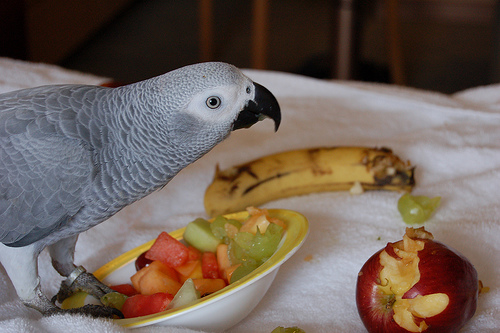
Fresh
Fruits and Vegetables: In addition to pellets, African Grey parrots should have a daily supply
of fresh fruits and vegetables. These should be offered in small, bite-sized
pieces. Good options include dark leafy greens (e.g., kale, spinach), carrots,
broccoli, sweet potatoes, apples, grapes, and berries. Avoid giving them
avocados, as they can be toxic to birds.
Whole
Grains and Legumes:
Whole grains like brown rice, quinoa, and whole wheat bread can be given to
African Grey parrots in moderation. Legumes such as lentils, chickpeas, and
beans are also nutritious additions to their diet. These foods provide
carbohydrates, fiber, and some protein.
Limited
Fats and Sugars:
Fats and sugars should be kept to a minimum in your parrot's diet. Avoid giving
them fatty and sugary foods like processed snacks, chocolate, fried foods, and
sugary drinks. Excess fat and sugar can lead to obesity and other health
issues.
Nuts and
Seeds: Nuts and
seeds can be given as occasional treats but should not make up a significant
portion of the diet. They are high in fat and should be offered in moderation.
Good options include unsalted almonds, walnuts, pecans, and pumpkin seeds.
Avoid giving them salted or seasoned nuts.
Calcium
and Vitamin D:
African Grey parrots require adequate calcium for their bone health. Provide
them with a calcium source such as cuttlebone or mineral blocks. Additionally,
exposure to natural sunlight or full-spectrum lighting will help ensure they
receive sufficient vitamin D.
Fresh
Water: Clean, fresh
water should always be available for your African Grey parrot. Change the water
daily to ensure its freshness.
Remember,
each bird is unique, and their dietary requirements may vary. It is essential
to consult with an avian veterinarian or a qualified avian nutritionist for
specific dietary recommendations based on your African Grey parrot's age,
overall health, and individual needs.
