
Anhinga (Nutrition)
The Anhinga,
also known as the "snakebird" or "water turkey," is a bird
species commonly found in the Americas, primarily in freshwater habitats such
as swamps, marshes, and rivers. When it comes to nutrition, Anhingas are
primarily piscivorous, meaning they feed on fish. Here are some key points
about Anhinga nutrition:
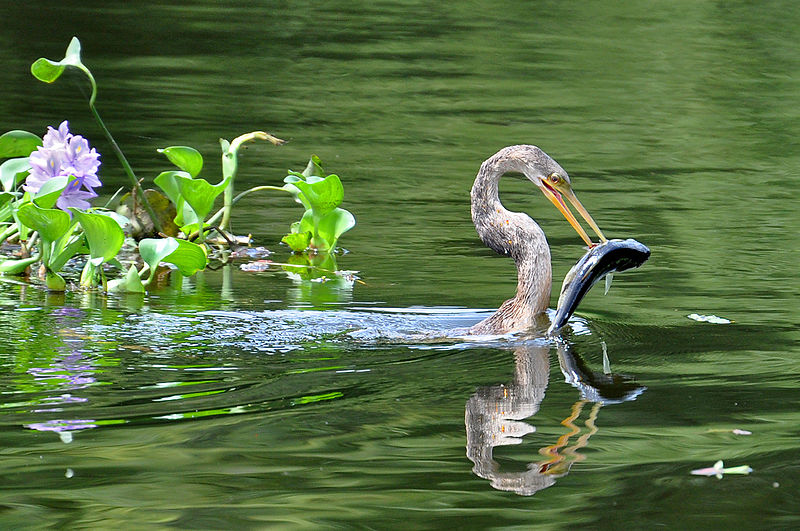
Diet: Fish is the primary food source for
Anhingas. They are excellent divers and swim underwater to catch their prey.
Anhingas have a long, slender neck and a sharp, pointed beak, which they use to
spear fish. They may also eat other small aquatic animals like amphibians,
reptiles, crustaceans, and insects.
Hunting
technique: Anhingas employ a unique hunting
strategy. They swim with their bodies submerged, with only their head and long
neck above the water. This allows them to move stealthily, making it easier to
approach fish without alerting them. When they spot a fish, they rapidly extend
their neck and impale the fish with their sharp beak.
Digestive
system: Anhingas have a specialized digestive
system to process their fish-based diet. Their long, slender beaks aid in
swallowing whole fish. They have a relatively short intestine but a large
stomach capable of holding fish of considerable size.
Nutritional
requirements: Anhingas require a diet rich in
protein and fats to meet their energetic needs. Fish provide them with these
essential nutrients, including omega-3 fatty acids, which are important for
their overall health.
Feeding
behavior: After catching a fish, Anhingas often
bring it to the water's surface and toss it into the air to swallow it
head-first. This behavior helps them swallow the fish more easily and reduces
the risk of injury from fish spines.
Metabolism: Anhingas have a relatively low metabolic rate, which allows
them to survive on fewer meals compared to birds with higher metabolic rates.
This adaptation helps them cope with fluctuating food availability in their
habitats.
Drinking
water: Unlike many other bird species,
Anhingas do not have specialized adaptations for drinking water. They obtain
water from their food sources, primarily fish.
It's important to note that the information provided is based on general knowledge about Anhinga nutrition. The specific dietary habits and preferences of individual birds may vary depending on factors such as their geographic location and local food availability.
