
Aardwolf
Introduction
The aardwolf
(Proteles cristata) is a fascinating member of the hyena family, native to the
grasslands and savannas of eastern and southern Africa. Despite its close
relation to the more well-known spotted and striped hyenas, the aardwolf is
distinct in various aspects, making it a unique and intriguing creature.
Appearance
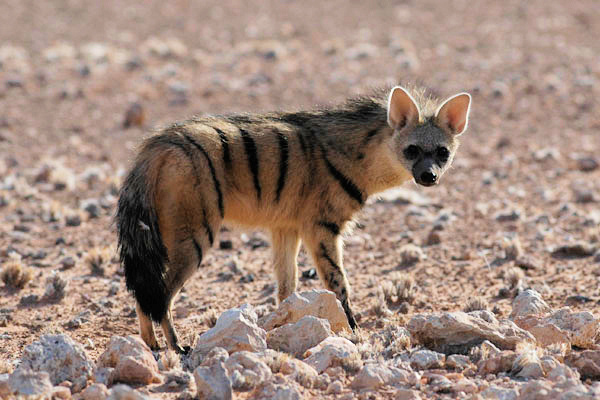
The aardwolf
is a small to medium-sized carnivore, weighing between 9 and 14 kilograms
(20-31 pounds) and standing at about 40-50 centimeters (16-20 inches) at the
shoulder. It has a slender, dog-like appearance with long, pointed ears and a
bushy tail. Its most distinctive feature is the long, dark mane that runs along
its back, which can be raised when the animal feels threatened.
History
The name
"aardwolf" is Afrikaans for "earth wolf," reflecting its
preference for digging burrows. It's thought to have evolved around 5 million
years ago and shares a common ancestor with the other hyena species. The
aardwolf's evolutionary path led it towards a more insectivorous diet,
distinguishing it from its scavenging relatives.
Behavior
Aardwolves
are nocturnal creatures, primarily active during the night. They are solitary
animals, except during the mating season. Their main activities include
foraging for insects and digging burrows, which serve as both shelters and
hunting grounds. Aardwolves are generally timid and will often flee rather than
confront potential threats.
Health
In the wild,
aardwolves can live up to 10 years. Common health concerns include parasitic
infections, particularly ticks, and injuries sustained while hunting or during
territorial disputes. In captivity, they may be susceptible to a range of
diseases and nutritional deficiencies if not provided with a suitable diet.
Nutrition
The
aardwolf's diet is almost exclusively composed of insects, particularly
termites. They have specialized molars for crushing exoskeletons and long,
sticky tongues for efficiently lapping up termites from their mounds. A single
aardwolf can consume thousands of termites in a single night.
Grooming
Aardwolves
are meticulous groomers, often seen licking their fur to remove dirt and
parasites. Their long, coarse hair requires regular attention to maintain its
insulating and protective properties. In captivity, providing opportunities for
grooming can be crucial to their overall well-being.
Treatment
If an
aardwolf is kept in captivity, it requires specialized care. This includes a
balanced diet rich in insects, veterinary check-ups to monitor for parasites
and other health issues, and an environment that mimics their natural habitat
as closely as possible. Interaction with humans should be minimal to reduce
stress.
Habitat
Aardwolves
are found in a range of habitats, including grasslands, savannas, and open
woodlands. They prefer areas with well-drained soils for easy burrowing and
close proximity to termite mounds for their food source.
Feeding
Aardwolves
have a highly specialized diet, mainly consisting of termites. Their foraging
behavior involves systematically raiding termite mounds, using their keen sense
of smell to locate them. They are capable of consuming a large quantity of
termites in a single feeding session, storing excess food in their stomachs for
later digestion.
Breeding
Breeding
occurs during the dry season when food is abundant. After a gestation period of
approximately 90 days, the female gives birth to a litter of one to four cubs.
The young are raised in the safety of the burrow and are weaned after about
three months. They become fully independent at around six months of age.
Conclusion
The aardwolf, with its distinctive appearance, insectivorous diet, and solitary behavior, stands out as a remarkable member of the hyena family. While it may not enjoy the same level of fame as its scavenging relatives, the aardwolf's unique adaptations and survival strategies make it a captivating subject of study and conservation efforts in the wild.
This
comprehensive guide provides an in-depth look into the aardwolf, covering
various aspects of its life, behavior, and habitat. It serves as a valuable
resource for anyone interested in learning more about this intriguing African
carnivore.
