
Adelie Penguin
Introduction
The Adelie
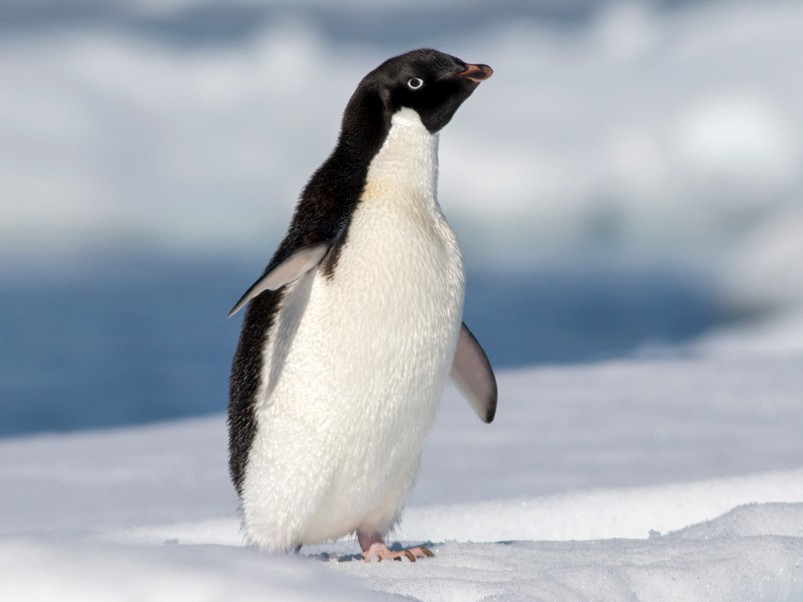
penguin is a species of penguin found in Antarctica. It is known for its black
head and back, white belly, and distinctive white eye ring. Adelie penguins
primarily feed on krill and fish, and they are excellent swimmers, capable of
diving to great depths to catch their prey. They build nests out of stones and
breed in large colonies during the Antarctic summer. Adelie penguins are well
adapted to the harsh Antarctic environment and have a unique waddling walk on
land. They are a popular subject of study for scientists studying climate
change and its impact on Antarctic ecosystems.
Appearance
Adelie
penguins have a distinct and recognizable appearance. They have a black head,
back, and flippers, with a white belly. One of their notable features is a
prominent white eye ring that surrounds their eyes. Their beak is black and
slightly curved, and their feet are black with webbed toes for efficient swimming.
Adelie penguins are small to medium-sized, reaching an average height of about
18 to 28 inches (46 to 71 centimeters) and weighing around 8 to 13 pounds (3.6
to 5.9 kilograms). They have a compact and robust body shape, designed for
streamlined swimming and efficient movement on land. Overall, their appearance
is well-suited for their Antarctic habitat
History
The history
of Adelie penguins is primarily linked to their discovery and exploration of
Antarctica. The species was first scientifically documented during the early
19th century by the French explorer Jules Dumont d'Urville, who named them
after his wife, Adélie. However, the indigenous people of Antarctica, such as
the Inuit and other Arctic cultures, were likely aware of these penguins long before
European exploration.
Throughout
the 20th century, various expeditions and scientific research expeditions
contributed to our understanding of Adelie penguins and their behavior.
Scientists have studied their breeding patterns, feeding habits, and migration
patterns, as well as their adaptations to the extreme Antarctic environment.
In recent
years, Adelie penguins have gained attention due to the effects of climate
change on their population. The reduction of sea ice and changes in krill
populations, which are their primary food source, have had significant impacts
on Adelie penguin colonies. Scientists continue to monitor and study these
penguins to better understand the implications of climate change on Antarctic
ecosystems.
Overall, the
history of Adelie penguins is intertwined with the exploration and scientific
research of Antarctica, highlighting their unique adaptations and vulnerability
to environmental changes.
Behavior
Adelie
penguins exhibit fascinating behaviors that are well-suited to their Antarctic
habitat. Here are some key aspects of their behavior:
Breeding
Colonies: Adelie
penguins gather in large breeding colonies during the Antarctic summer. These
colonies can consist of thousands or even tens of thousands of individuals.
They build nests using stones, which provide protection and insulation for
their eggs and chicks.
Mating
Rituals: Adelie
penguins engage in elaborate mating rituals. Males search for the perfect
pebble to present to a potential mate, and if accepted, they form a bond for
the breeding season. They communicate through various vocalizations, head
movements, and displays.
Nest
Building: Adelie
penguins are known for their diligent nest-building behavior. They gather
stones and arrange them in circular nests, providing a safe and elevated spot
for their eggs.
Foraging: Adelie penguins are excellent
swimmers and divers. They can dive to depths of up to 150 meters (490 feet) and
stay submerged for several minutes. They primarily feed on krill and fish,
using their streamlined bodies and flipper-like wings to navigate through the
water.
Waddling
Walk: On land,
Adelie penguins have a distinct waddling walk, where they lean forward and use
their feet and flippers to propel themselves. This walking style is efficient
for traveling over rocky or icy terrain.
Communal
Defense: Adelie
penguins exhibit communal defense behaviors to protect themselves and their
chicks from predators, such as skuas and leopard seals. They form groups,
vocalize loudly, and coordinate their movements to deter potential threats.
Long-Distance
Migration: Adelie
penguins undertake long-distance migrations, traveling several hundred
kilometers (miles) to reach their breeding grounds each year. They rely on
their navigational abilities and memory to return to the same colony where they
were born.
These
behaviors are crucial for the survival and reproductive success of Adelie
penguins in the challenging Antarctic environment. They have evolved unique
adaptations and social structures that enable them to thrive in one of the
harshest environments on Earth.
Health
Adelie
penguins, like other wildlife species, can face various health challenges in
their natural habitat. Here are some aspects related to the health of Adelie
penguins:
Parasites
and Diseases: Adelie
penguins can be affected by parasites such as lice, ticks, and mites. These
parasites can cause irritation, feather damage, and stress. In addition,
penguins can also be vulnerable to bacterial and viral infections, although the
prevalence and impact of specific diseases on Adelie penguins are not
extensively studied.
Climate
Change and Food Availability: Climate change poses significant challenges to the health of
Adelie penguins. Alterations in sea ice patterns and temperature shifts can
affect the availability and distribution of their primary food source, krill.
Reduced access to food can lead to malnutrition, weakened immune systems, and
decreased breeding success.
Environmental
Contaminants: Adelie
penguins can be exposed to environmental contaminants, such as pollutants and
heavy metals, through their prey or the surrounding marine environment. These
contaminants can accumulate in their bodies over time and have potential
negative effects on their health, including reproductive issues and compromised
immune systems.
Predation: Adelie penguins face predation risks
from natural predators, including leopard seals and various seabirds. These
interactions can result in injuries or fatalities, affecting the overall health
and survival of individual penguins and their colonies.
Human
Interference: Human
activities, such as tourism and research visits to penguin colonies, can
disturb their natural behaviors and cause stress to the penguins. Proper
management and regulations are crucial to minimize human impacts and maintain
the health and well-being of Adelie penguins.
Monitoring
and research efforts are ongoing to better understand the health challenges
faced by Adelie penguins and to implement conservation measures to mitigate
these threats. By protecting their habitat, managing human activities, and
addressing climate change, we can contribute to the long-term health and
sustainability of Adelie penguin populations.
Nutrition
Adelie
penguins have a diet primarily composed of krill, a small shrimp-like
crustacean abundant in the Southern Ocean. However, they are opportunistic
feeders and will also consume other types of fish and squid when available.
Krill serves
as the main food source for Adelie penguins, and they have adaptations that
allow them to efficiently capture and consume these tiny organisms. Adelie
penguins use their streamlined bodies and strong flippers to propel themselves
through the water and pursue their prey. They are skilled divers, capable of
diving to depths of up to 150 meters (490 feet) and remaining underwater for
several minutes.
These
penguins have special adaptations in their beaks and mouths that allow them to
filter and strain krill from the water. They have ridges and backward-pointing
bristles on their tongues and the roof of their mouths, which help them retain
and swallow the krill while expelling the excess water.
The diet of
Adelie penguins plays a crucial role in their overall health and breeding success.
Changes in krill populations, which can be influenced by climate change and
variations in sea ice cover, can impact the availability of this vital food
source. Reductions in krill abundance can have negative consequences for the
nutritional status and reproductive capabilities of Adelie penguins.
The
relationship between Adelie penguins and krill highlights the
interconnectedness of the Antarctic food web, and the conservation of these
penguins relies on the preservation of their primary food source. Efforts to
protect and manage krill populations are essential for maintaining the
nutritional well-being of Adelie penguins and the overall health of the
Antarctic ecosystem.
Grooming
Grooming is
an important behavior for Adelie penguins, as it helps them maintain the
condition of their feathers and keep their bodies clean. Here are some key
aspects of grooming in Adelie penguins:
Feather
Maintenance: Adelie
penguins have a dense coat of feathers that provide insulation and
waterproofing. Grooming helps them keep their feathers in optimal condition.
They use their beaks to preen and realign their feathers, removing dirt,
parasites, and debris. They also distribute oil from a gland located near the
base of their tail onto their feathers, which helps enhance waterproofing and
keeps them well-oiled.
Heat
Regulation: By
grooming, Adelie penguins can fluff up or flatten their feathers, depending on
the temperature. Fluffing up the feathers traps a layer of insulating air,
providing warmth in cold conditions. Conversely, flattening the feathers helps
them dissipate heat and stay cool in warmer temperatures.
Removing
Parasites: Grooming
behavior allows Adelie penguins to remove parasites such as lice, ticks, and
mites from their feathers. By preening and shaking their bodies vigorously,
they can dislodge and get rid of these unwanted guests, which can cause
discomfort and potential health issues.
Social
Bonding: Grooming
also serves as a social behavior among Adelie penguins. Mates or colony members
may engage in mutual grooming, where they preen each other's feathers. This
behavior helps strengthen social bonds within the colony and may contribute to
pair bonding and cooperative behaviors during breeding.
Grooming is
a regular and essential activity for Adelie penguins, contributing to their
overall health, maintaining the integrity of their feathers, and promoting
social interactions within their colonies. By keeping their feathers clean,
well-aligned, and in good condition, Adelie penguins are better equipped to withstand
the harsh Antarctic environment.
Treatment
Adelie
penguins are wild animals and live in their natural habitat, Antarctica. As
such, they do not receive direct treatment from humans unless they are part of
a research or conservation program. In such cases, the treatment is typically
focused on minimizing human interference and ensuring the well-being of the
penguins.
Research and
conservation programs that involve Adelie penguins may monitor their
populations, study their behaviors, and assess their overall health. These
efforts aim to understand the ecological factors affecting their survival and
implement appropriate conservation measures.
When it
comes to the health of Adelie penguins, prevention is key. Conservation efforts
focus on protecting their habitat, preserving food sources like krill, and
managing human activities to minimize disturbances to their natural behaviors.
By addressing the root causes of potential threats, such as climate change and
environmental degradation, conservationists work towards ensuring the long-term
health and well-being of Adelie penguins and their ecosystems.
In summary,
direct treatment of Adelie penguins is not common, as they primarily receive
conservation-focused efforts to protect their habitat and address the factors
that impact their health and survival.
Conclusion
In conclusion, Adelie penguins are a species of penguin found in Antarctica. They have a distinct appearance with black heads and backs, white bellies, and a white eye ring. Adelie penguins exhibit various behaviors such as breeding in large colonies, elaborate mating rituals, nest building, efficient foraging, waddling walks on land, and communal defense against predators. They face health challenges including parasites, climate change impacts, environmental contaminants, predation, and human interference. Adelie penguins primarily feed on krill and other marine organisms, using their streamlined bodies and specialized beaks to capture and consume their prey. Grooming is an important behavior for maintaining their feathers and social bonding. Conservation efforts are crucial for protecting their habitat, preserving food sources, and addressing the factors that affect their health and survival. By understanding and safeguarding these unique Antarctic creatures, we can contribute to the long-term well-being of Adelie penguins and the ecosystems they inhabit.
Adelie Penguin Video Documentary
