
Barred Owl
Introduction
The Barred Owl (Strix varia) is a medium-sized
owl native to North America. Known for its distinctive hooting call and
striking appearance, this species is a fascinating creature that has captured
the interest of birdwatchers and wildlife enthusiasts alike. In this article,
we will explore various aspects of the Barred Owl's life, including its
appearance, history, behavior, health, nutrition, grooming, treatment, habitat,
feeding habits, and breeding patterns.
Appearance
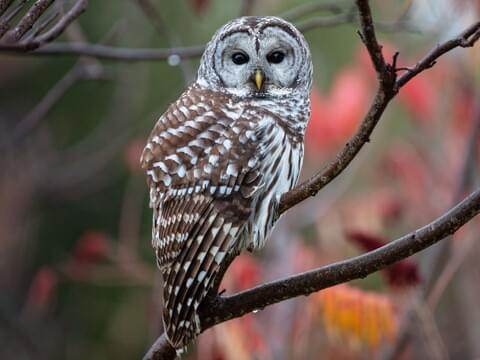
Barred Owls
have a unique appearance that sets them apart from other owl species. They have
large, round heads with dark eyes and no ear tufts. The facial disk is a mix of
pale and dark feathers, forming a distinctive pattern of horizontal bars, which
gives them their name. The upperparts are brown with white bars, while the
underparts are whitish with vertical brown streaks. They have strong talons and
a hooked beak, which they use to capture and consume their prey.
History
Barred Owls
have a rich history in North America. Originally, they were primarily found in
the eastern parts of the continent, but over the years, their range has
expanded westward, and they can now be found throughout much of the United
States and southern Canada.
Behavior
Barred Owls
are primarily nocturnal creatures, meaning they are most active during the
night. They are excellent hunters, using their keen sense of sight and hearing
to locate prey, which mainly consists of small mammals like mice, voles,
squirrels, and rabbits. They are also opportunistic hunters and may take birds,
amphibians, and insects when the opportunity arises. Barred Owls are solitary
birds, except during the breeding season when they form monogamous pairs.
Health
Like all
living creatures, Barred Owls are susceptible to certain health issues. They
can suffer from avian diseases, parasitic infections, and injuries. If you
encounter a Barred Owl that appears sick or injured, it is essential to contact
a local wildlife rehabilitation center or an experienced avian veterinarian for
proper treatment and care.
Nutrition
Barred Owls
are carnivorous predators and require a diet that is rich in protein. As
mentioned earlier, their primary diet includes small mammals, birds,
amphibians, and insects. In captivity, if permitted and properly regulated, their
diet can consist of mice, rats, and other small prey animals.
Grooming
Barred Owls,
like most birds, engage in regular self-grooming to keep their feathers clean
and in good condition. They use their beak to preen and remove dirt and debris
from their feathers. Additionally, they may take dust baths to help control
parasites.
Treatment
If a Barred
Owl requires treatment due to illness or injury, it is crucial to seek help
from professionals. Attempting to handle or treat an injured owl without proper
training can cause further harm to the bird and may even be illegal in some
areas due to protected species regulations.
Habitat
Barred Owls
inhabit a variety of forested areas, including deciduous and mixed forests.
They are also found in swamps, wetlands, and wooded riparian areas. These
adaptable birds can thrive in both remote wilderness and suburban environments.
Feeding
As efficient
hunters, Barred Owls rely on their excellent hearing to detect the sounds made
by their prey. Once located, they swoop down silently and catch their quarry
with their sharp talons. Barred Owls are known to cache food items by stashing
them in tree branches or other suitable locations to eat later.
Breeding
Breeding
season for Barred Owls typically begins in late winter or early spring. During
this time, they engage in elaborate courtship displays, such as hooting and
mutual preening, to strengthen their bond. They usually lay 2 to 4 eggs in a
nest located in a tree cavity or a stick nest abandoned by other large birds.
The female incubates the eggs, while the male provides food for her during this
period. After hatching, both parents take part in caring for the young owlets
until they are ready to leave the nest.
Conclusion
The Barred Owl is a remarkable and resilient bird, adapting well to various environments across North America. Its stunning appearance, haunting call, and impressive hunting abilities make it a captivating species to observe and study. As with all wildlife, it is essential to appreciate these beautiful creatures from a respectful distance, allowing them to thrive in their natural habitats. By understanding and respecting their needs, we can help ensure the continued survival of the Barred Owl for generations to come.
Barred Owl Videos
